
Some early Kurosawa
I also write about old films sometimes.

For years I’ve written occasionally about classic films, mostly those on the Criterion Channel/Criterion Collection, for a mostly private audience. While I expect to get back to posting public policy content here, I figured I’d change things up a bit with a recent post on cinema.
*
I had avoided trying to catch up with Akira Kurosawa’s work because I didn’t want to watch long samurai movies. Finally it dawned on me that there must be Kurosawa films on the Criterion Channel that were not long and not about samurais, and in fact there were quite a lot that are not those things, especially among his earlier output. So off I went.
My favorite of the four was No Regrets for Our Youth (1946), starring Setsuko Hara, best known for her radiant performances in Yasuhiro Ozu’s films. Three idealistic students are best friends in the Japan of the 1930s, an increasingly authoritarian place. Loosely based on real happenings, it sets up a love triangle in which Hara loves the dissident and is in turn loved by the conformist, who becomes a prosecutor. (Wasn’t We the Living kind of like that?) You can probably guess some of what happens next but not the developments of the final half hour, which push Hara to almost unbelievable extremities. It has been remarked that this is practically the only film in which Kurosawa made a woman his heroic protagonist, but I will note for the record that “paying proper honor to the parents” looms large to the very end.
In Drunken Angel (1948), an alcoholic doctor (Takashi Shimura) tries to save the health of a young gangster (Toshiro Mifune) whose afflictions include bullet wounds, TB and a drinking problem. Mifune’s physicality and violent manner almost jump off the screen and made him a big star overnight. (He was to do 15 more collaborations with Kurosawa.) There is plenty of sociological background (vice-ridden slum district with open sewers) and the music rises to a new level with K’s first collaboration with Fumio Hayasaka.
Scandal (1950) is widely regarded as one of Kurosawa’s weakest, but the subject matter (a defamation lawsuit against a sleazy tabloid) interested me, and indeed both the legal process and journalism are treated scathingly. Takashi Shimura, who played the doctor in Drunken Angel, returns here as a corrupt lawyer with maybe a conscience, one of his 21 appearances in Kurosawa films. Mifune switches type and plays the soft-spoken, well-behaved victim seeking justice, and music is again a highlight (in one extended sequence the people at a social gathering sing two Christmas songs followed by “Auld Lang Syne,” all in Japanese). Under the censorship rules the American Occupation could not be shown directly, but you could certainly detect its presence as an influence.
Shimura, a homely middle-aged guy with a lazy manner, seemed to be Kurosawa’s favorite actor around which to construct moral ambiguities, and he took center stage with Ikiru (”To Live,” 1952), about a mid-level municipal employee with a dull, unfulfilling job who learns he has not long to live and decides to -- well, what will he do with his remaining months? I’m not buying the take from some over-impressed critics that this film somehow lays bare the secrets of life, but it does have some pricelessly funny scenes, as well as some of the most caustic commentary on deadlocked government process I’ve ever seen.
In these early films Kurosawa reminds me of Ingmar Bergman in his ability to coax remarkable acting from his cast members, in his attention to background, and in his dedication to the human face as a subject.
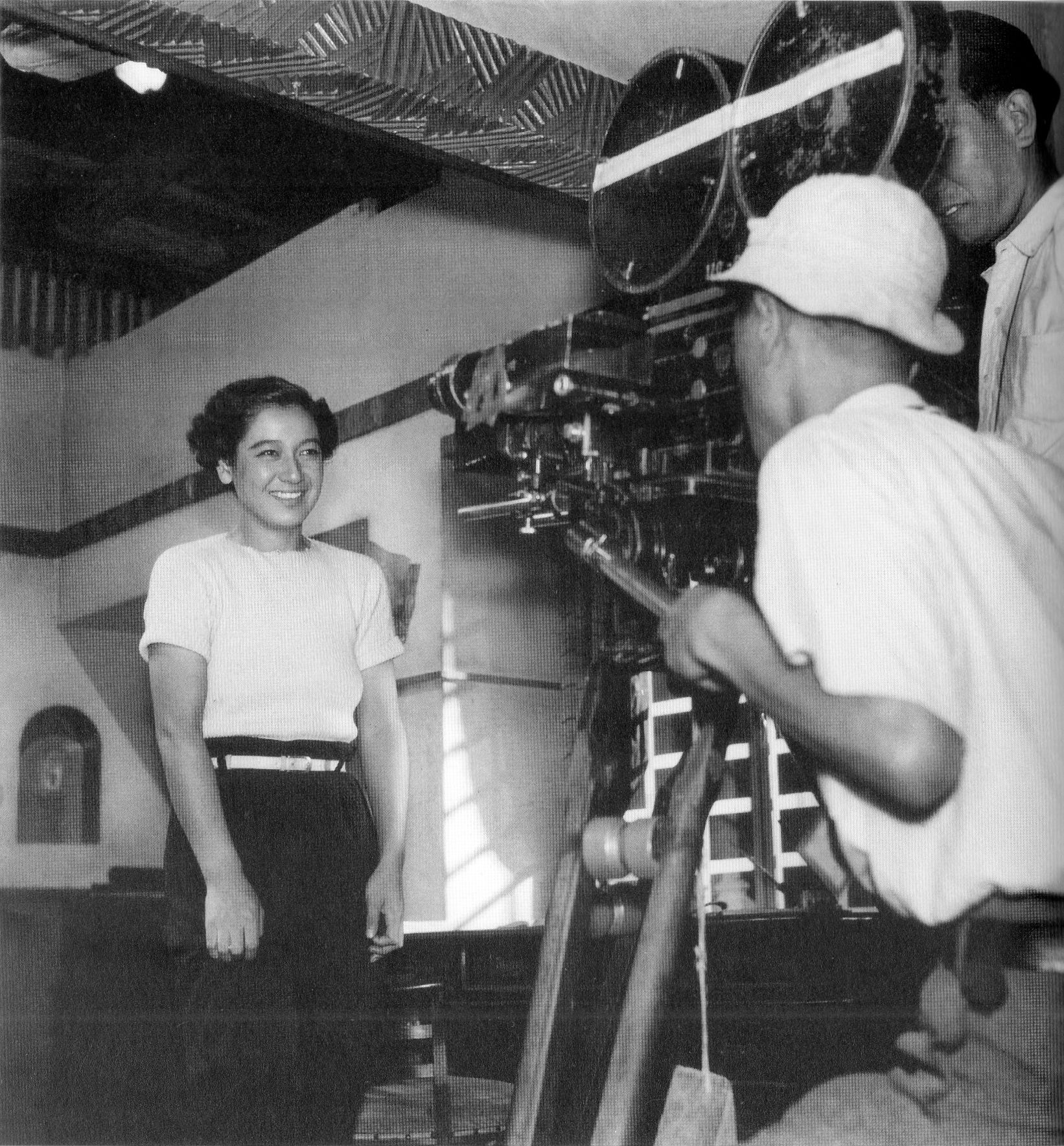
Photo of Setsuko Hara being filmed by Asakazu Nakai and Akira Kurosawa on the set of No Regrets for Our Youth. Taken by Tadahiko Hayashi in 1946. (Wikimedia Commons)

Fascinating, especially the photo of a young lady facing a camera, smiling in a shy and generous manner. Am I reading what she is projecting correctly? I don't pretend to be an expert at such things.